June 3, 2026

1969 Fiberfab Valkyrie

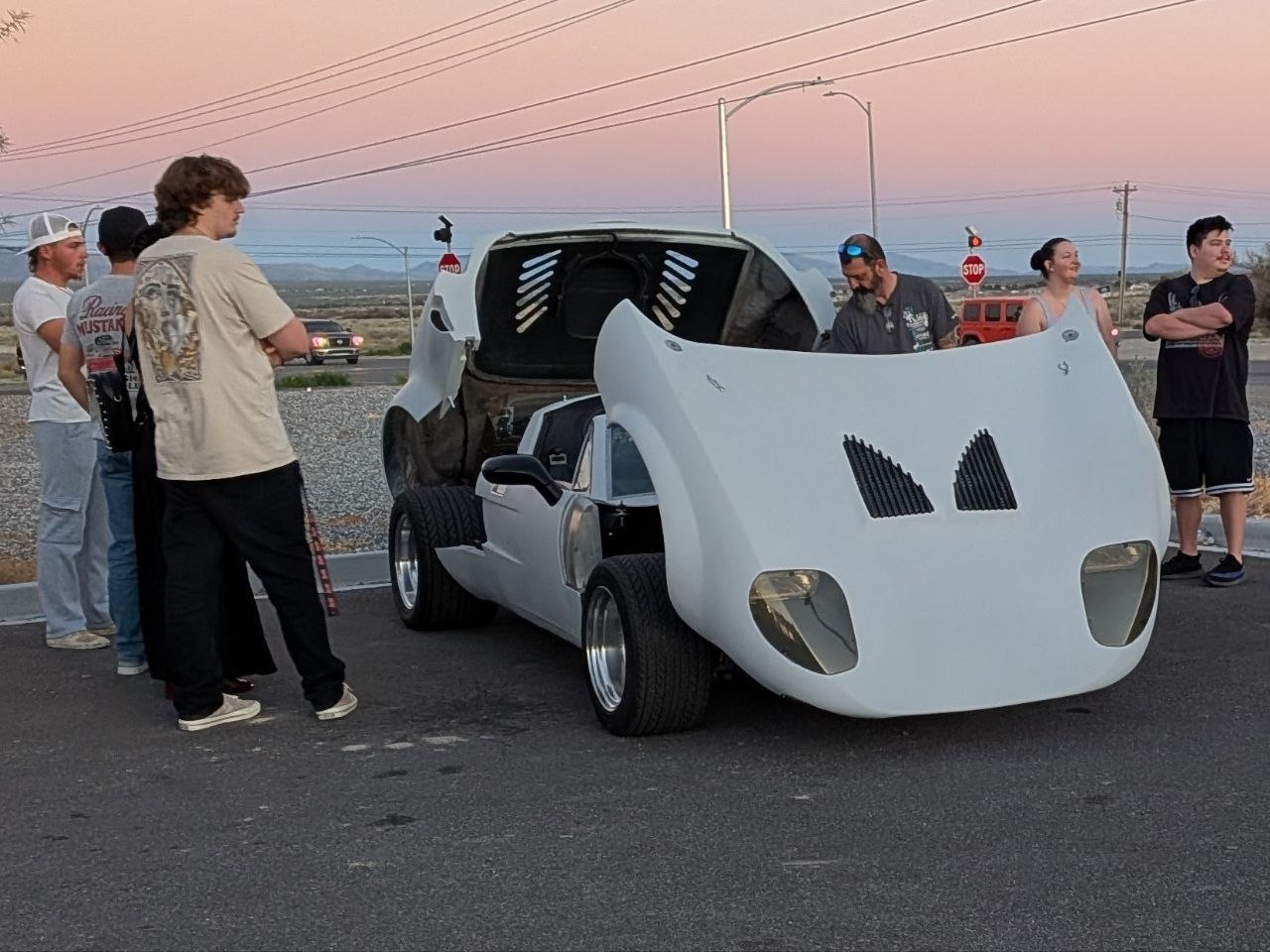
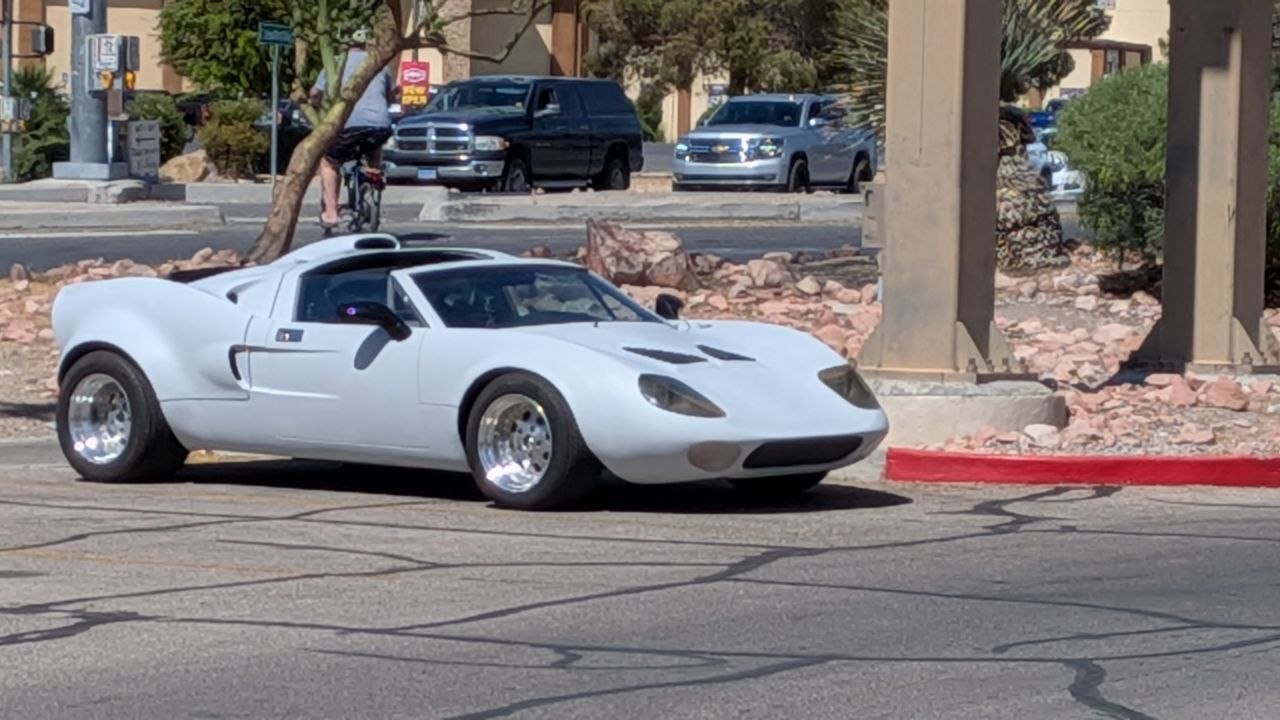
This webpage is a story (with lots of pictures) about a home-built sports car that was based on a kit sold in the late sixties and early seventies by a company called Fiberfab.  This garage-project has evolved over the 50 years I have owned it.   

body and frame as received
It was essentially a basket case when purchased in 1976.

It’s one of those projects that hangs around for many years in various states of incompletion while life happens.  I first acquired this Fiberfab Valkyrie for $1,100 in 1976 as a “basket-case”.  At least 1 other person (probably more) had attempted to build it and for unknown reasons gave up.  Most “kit cars” of that period- late 60’s, early 70’s- were not easy to complete for the casual car enthusiast, contrary to what the advertisements would lead you to believe, and the Fiberfab Valkyrie was a perfect example. 

The Valkyrie chassis was originally designed to use Corvair suspension front and rear.

I had about 10 years experience working on cars (as a hobby) and learned a lot from the older neighborhood drag racers and hot rodders at the time I acquired it as a typical “basket case” project car.  Fortunately, I also had access to some equipment and tools that the average car enthusiast working in their home garage might not, such as a forklift, I-beam mounted electric and chain hoists, a band saw, welders, oxy-acetylene torch, a decent selection of nuts and bolts, various gage rolls of wire, and about 1500 square feet of climate-controlled space in a corner of my Dad’s business were he sold industrial control systems.  I recall it took me about a year of evenings and weekends to get this Valkyrie to a point where I could register it and drive it around.  Since it had (at that time) a number of significant parts sourced from a Corvair, it made sense to me (and to the state of New Jersey) to register the car as a 1969 Corvair.  The Corvair parts included both the front and rear suspensions, transaxle, windshield, and steering box.  Note that the windshield is the only remaining item from the Corvair and the car currently wears a (Nevada) state-issued VIN plate.  It is now registered as an Assembled Vehicle (ASVE), with the model listed as Valkyrie.

Chassis (upside down) during restoration in 2014. A rottissori would have helped.

Over the many years I have owned it, my Valkyrie repeatedly reached a driveable state but was shortly dismantled again so that various aspects of the car could be improved.  Although I thoroughly enjoyed (and still do) performing nearly all of the work myself, I did not have the skills or funds to create a show car.  The goal has always been to create a good-handling, mid-engined, built-on-a-budget, unique sports car.  

In the photo galleries that follow, I have tried to present the images chronologically as I describe the many changes that have been made over the years.  

There’s no doubt in my mind that others with more skills and more funds would have had this car completed, and probably built a dozen more in the time I have owned it.  For me, there always seemed to be something else that was demanding my attention and my resources, but I always had a goal of getting it to the “next level”, and there’s always something that can be improved.   


More content coming soon!

  • In The Beginning
  • It Drives!
  • Headlight Conversion – creating a more familiar face
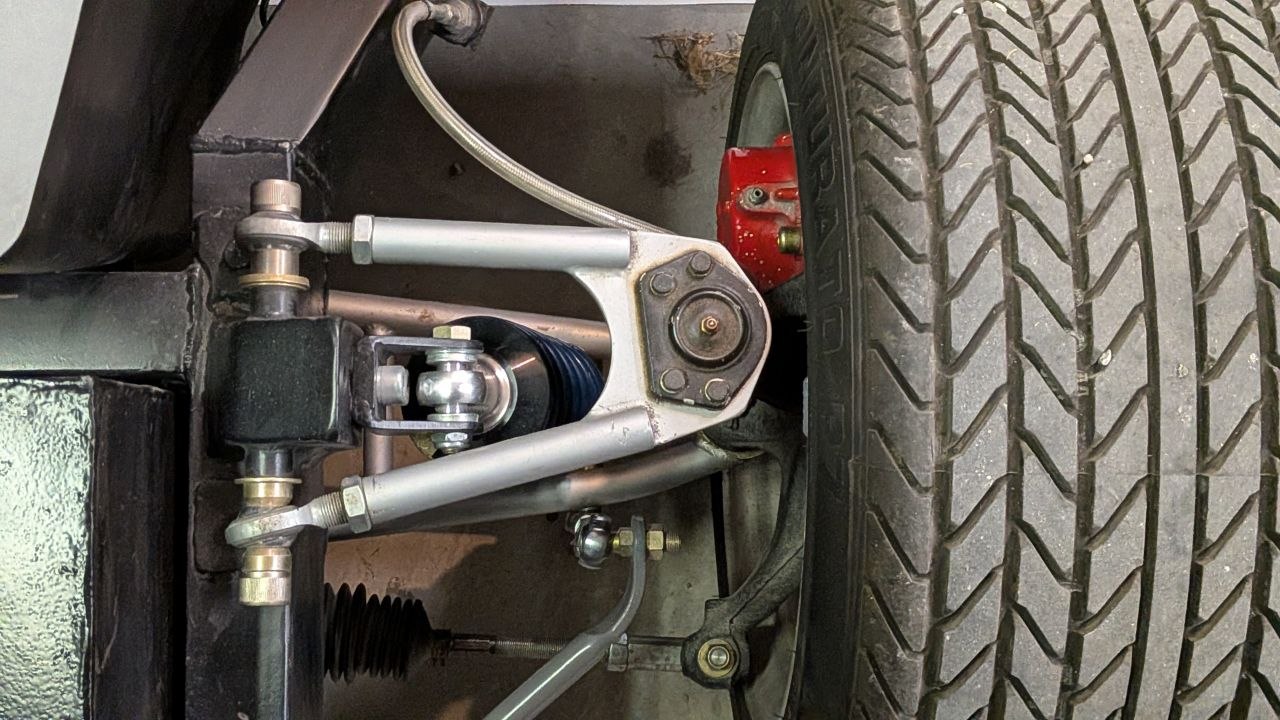
  • Improving the Corvair Front Suspension
  • Fixing another Major Flaw, or two:
  • Seating position
  • Engine Position
  • Transmission location
  • Getting Lucky at the Lincoln-Mercury Dealer parts counter
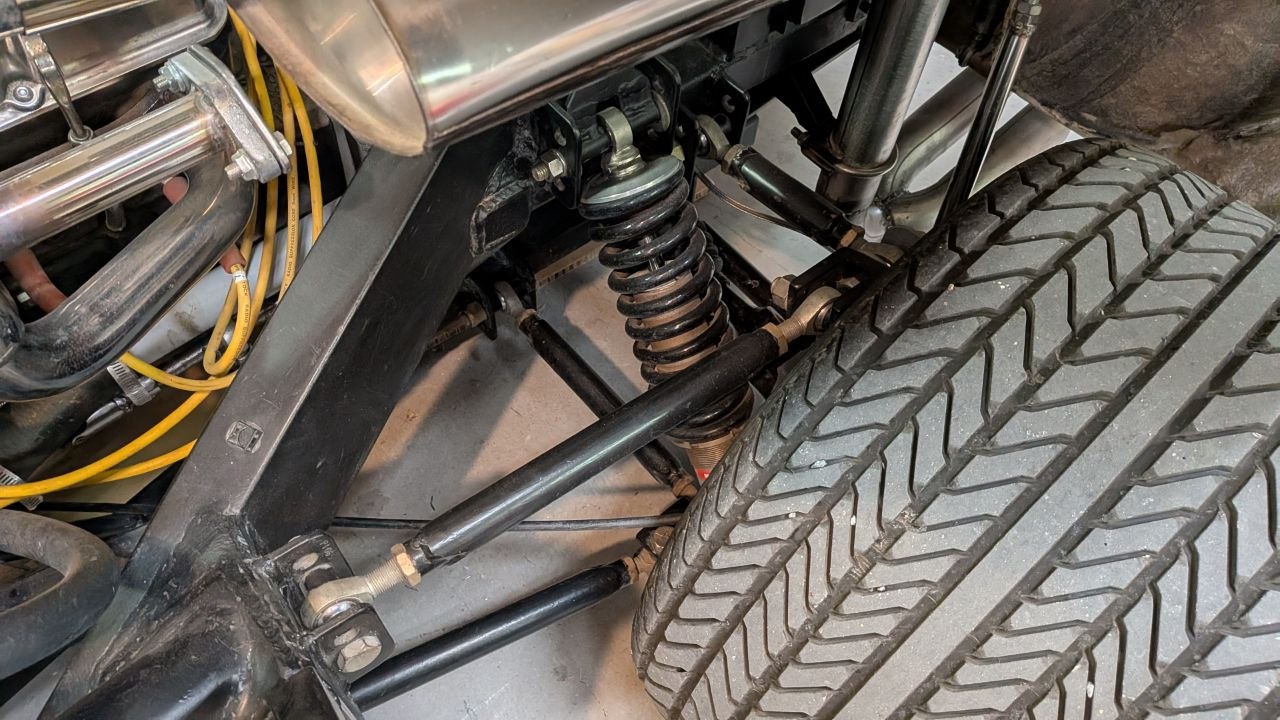
  • Replacing the Corvair rear suspension and transaxle
  • Designing the changes with paper and pencil
  • Wheels and Tires and Flares, Oh MY!
  • Carburetors Suck –  It’s EFI Time!
  • Moving the Fuel Tank to the rear
  • Designing more changes with CAD
  • A New IFS by Jim Meyer Racing
  • Moving to the high-desert in Nevada
  • A major chassis “clean-up”
  • Moving the fuel tank back to the front
  • Radiator to the rear?
  • CAD + 3D printing helps solve many challenges
  • Making a fiberglass engine cover with a scoop!
  • Converting the old Stewart-Warner speedometer to GPS-stepper motor
  • My favorite color: Gray Primer
  • A Nevada Title & VIN !
  • On Display
  • Door side mirrors – two attempts!
  • New motor mounts
  • Kick-panels
  • What’s next?

In The Beginning

Can someone else’s nightmare become my “dream car”?

In or around July 1976, a friend alerted me to an ad in a local newspaper for a Fiberfab Valkyrie kit for sale not far from where I lived.  As long as this find was not already “butchered” beyond recognition, he knew this was something I would  find hard to resist.  We made arrangements to check it out.  Although the fiberglass body was sitting on the steel tube frame, if I purchased it, I would basically be starting from “step-1” in the build process.  On the plus side, it came with a number of parts that I would have had to source from donor cars in a salvage yard. 

The deal also included a Chevy V8 engine in (unknown condition) which was already in the chassis, bolted to a Corvair 4-speed transaxle using the adapter and the required modifications that were part of the original Valkyrie kit.

Corvair front and rear suspension was also installed on the frame giving it the appearance, at first glance, that a substantial amount of work was already done.  But after after agreeing on the price and getting it home, reality gradually set in; there was a ton of work needed.  The body had to come back off the frame, to say the least.  There was no wiring and no plumbing.  no brake lines, no windshield, no wipers, no instruments, and no tail lights. $1,100 was a significant amount of money in 1977 for what my Dad called, “a incomplete pile of parts”.  But, he had no interest in cars, and I quietly ignored his plea for me to see if the seller would take it back.

One of the first tasks was to get the engine that came with the car running and see what kind of condition it was in.  After getting the body out of the way (off the frame; the engine is half tucked under the middle body section, making it very difficult to work on), I got the engine running and discovered it had extremely low oil pressure.  I had prior experience successfully building 3 high performance engines, but this low oil pressure problem had me stumped.  I felt like I was wasting time with the first thing I tried to do, and I had a long list of action items still ahead.  Feeling frustrated and a bit like I was taken advantage of by the seller, I needed to get past this issue and make some progress.  I located a low mileage 350 cubic inch small block truck motor (with four-bolt mains and a forged crank) for a reasonable price.  Finally I could check off the engine, and move on to the next task.

For the next several months, more parts were sourced; some new, some used, and work steadily progressed. A switch panel from a Chrysler, a tilt and telescopic steering column from a Cadillac, a new Corvair windshield, and a new Momo steering wheel. 

Keep in mind, funds were tight at the time.  I remember one of the first big purchases was a set of Appliance Plating aluminum wheels that were styled after the legendary BBS wheels frequently seen on Porsches and BMWs.  Of course the AP wheels were a fraction of the price, but what a transformation!

For tires, I went with used Dunlop 205/70-15 tires from my Dad’s Jaguar XJ6 for the front, and I purchased H70-15’s (similar to 235/70-15) for the back.  Remember, this was before the introduction of the extremely wide and low profile Pirelli P7 tires that would soon appear on the Lamborghini Countach LP 500S. 

It took me about 6 months to get things toa point where I could get the car to move under its own power.  Next, I needed to make it legal.  Getting a New Jersey registration was possibly going to be a nightmare.  I had heard stories from friends that built hot rods describing the red tape and hoops the NJDMV would give you if you didn’t have a vehicle title with a VIN plate that matched.  To make this step go as smooth as possible, I purchased a 1966 Corvair just get the VIN/serial number plates and the title, which I used to insure my car and and get its first registration and plates!  It was quite exciting, especially because I later found out that how I did this was frowned upon.  In most states, you are not allowed to remove a VIN plate from one car and put it on another.  Apparently, this is how chop shops and car thieves get stolen cars back into circulation.  Once I knew this, I never felt quite at-ease driving the car, always on the lookout for the boys in blue, and thinking about what I would say if pulled over.  But amazingly, in the 28 years it was in New Jersey, I was never pulled over.   This was partly because the car was never “on the road” for very long before I took it back apart to make improvements.

Right from the start, there were things that I didn’t like about my Fiberfab Valkyrie:

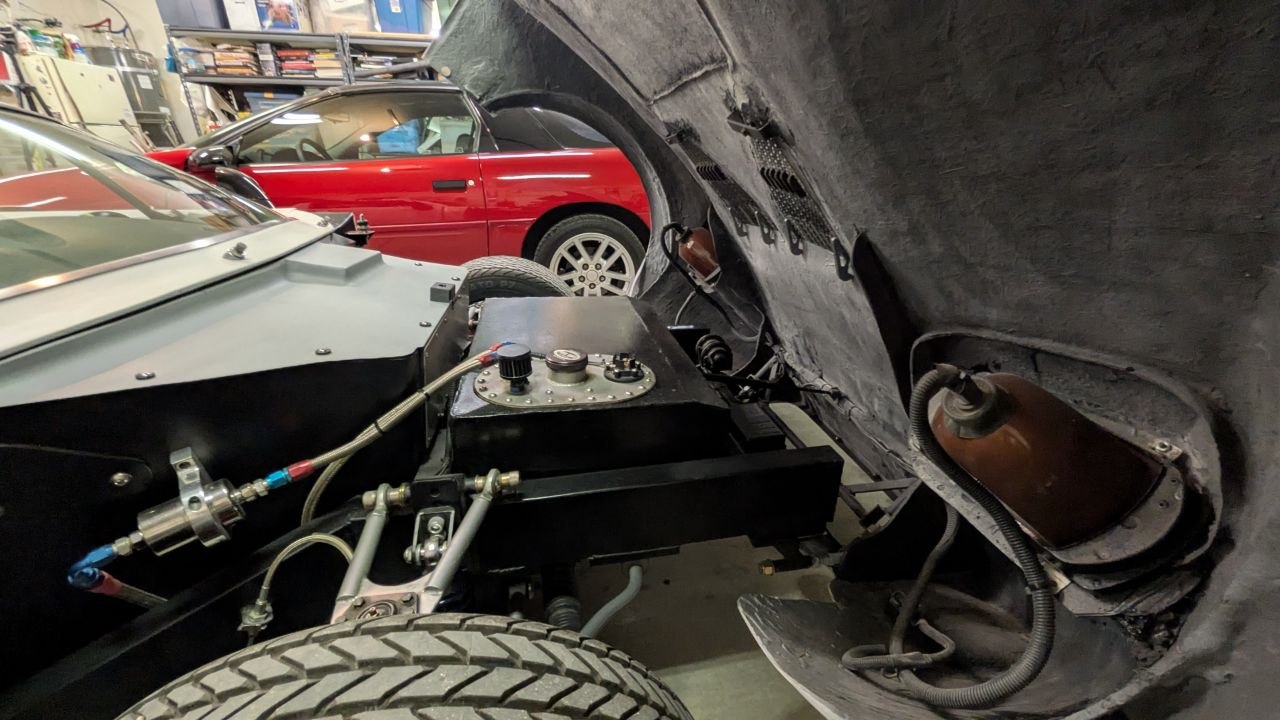
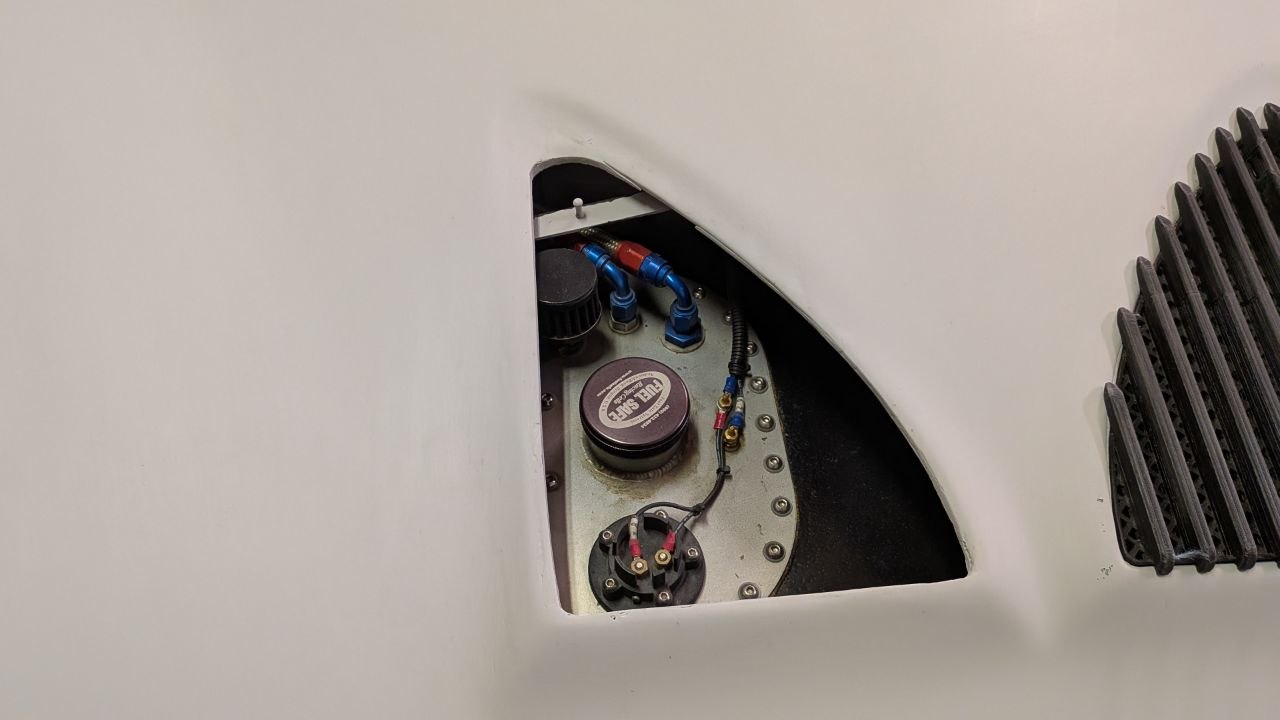
  1.  After mounting the body on the frame, there was no easy access to the front half of the chassis.  To do nearly any kind of maintenance required jacking up the car and removing the front tires to gain access through the wheel wells.  For some things you might be able to reach in through the triangular openings on the top side of the front clip.  Fortunately, there wasn’t much mounted up front when I first assembled my Valkyrie.   Just a radiator and master cylinders for the brakes and clutch.  Things which typically don’t require frequent attention.
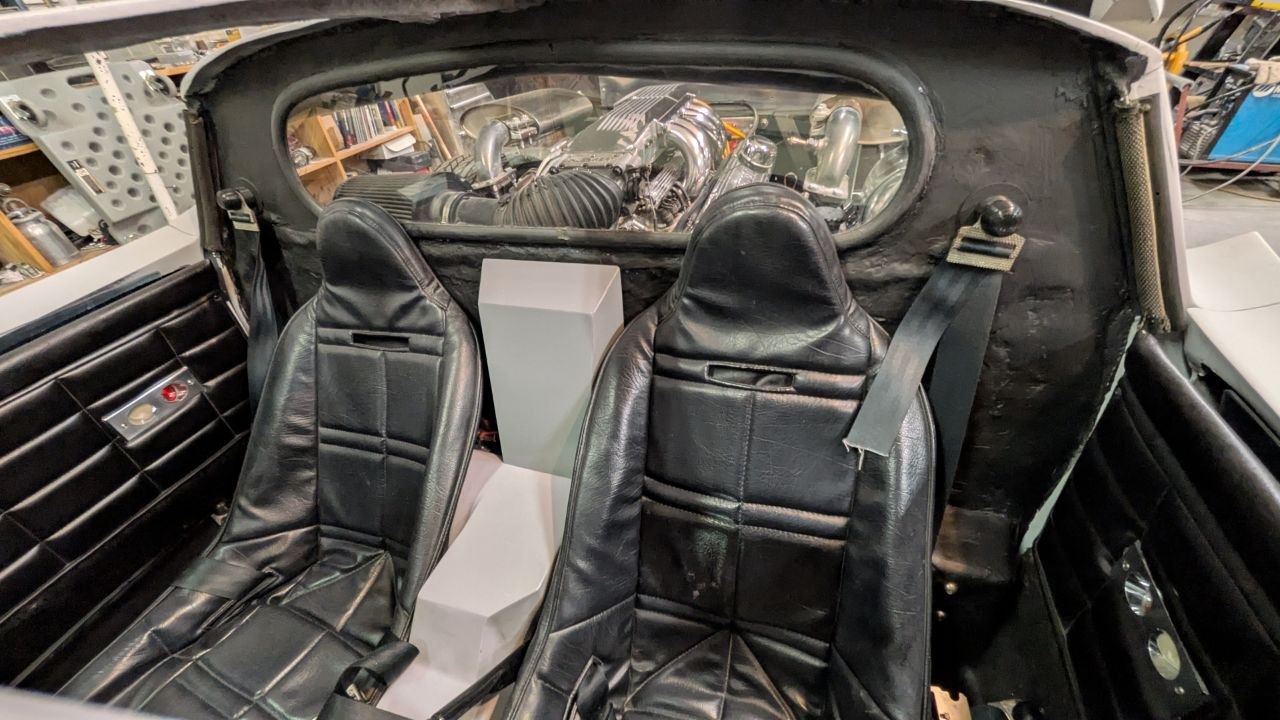
  2. The front of the V8 engine was fractions of an inch from the interior bulkhead (firewall).  The hot exhaust manifolds were just inches from the back side of the fiberglass seat surfaces.  Adjustment of belts and checking the ignition timing required opening an access hatch located between the seat areas.
  3. The way in which the Corvair transaxle was being used (turned around, with the V8 engine’s bell housing bolted to the transmission using a 1″ thick adapter) just seemed like a bad configuration, resulting in the front of the engine being tucked under the bulkhead window (see #2, above).  Once I got a look at how most mid-engine drivelines were laid out, and in particular, the De Tomaso Pantera, I wanted to change my Valkyrie, and a long planning process began.
  4. The roof was very low which, combined with wide door sills, made the car a bit tricky to get in and out of.  It also got quite warm in the summer months, partly due to the engine being so close to the bulkhead.
  5. Although the Valkyrie styling was heavily influenced by the Ford GT40 race car, but the Valkyrie had little choice but to use DOT approved round sealed beam headlights.  With the clear plastic headlight covers in place, it wasn’t bad looking.  And even though the handful of GT40 road-legal cars did use round DOT headlights, I thought the Valkyrie would look much better if I could modify the body to use the same rectangular Cibie headlights that the GT40 race cars used.
  6. The Valkyrie wasn’t designed to use anything resembling a real bucket seat.  Race cars and dune buggies of that time typically had bucket seats based on fiberglass or aluminum seat shells with removable upholstery covers.  Instead, the Valkyrie’s molded-in fiberglass floor had the seat surfaces also included in the mold, but they were literally shaped like a park bench.  Fiberfab’s thought was the seat upholstery would be fastened at the top (shoulder area) and bottom (thigh area) in a manner such that it formed a sling, something like a hammock.  Apparently, they weren’t kidding about this, and I shouldn’t criticize it too much, as I never really considered trying it.

One by one, I would implement solutions for each of these issues, always figuring out how I could accomplish things using the least amount of the discretionary funds I had on hand.