
My Valkyrie was one of the early versions of the kit which featured a 2-piece body. This meant there was a front-main section, and a rear section that tilted open. The front-main section (not including the doors, of course) was one large piece of fiberglass that started at the tip of the nose and included the interior floor and seat surfaces, roof, and the firewall/bulkhead.
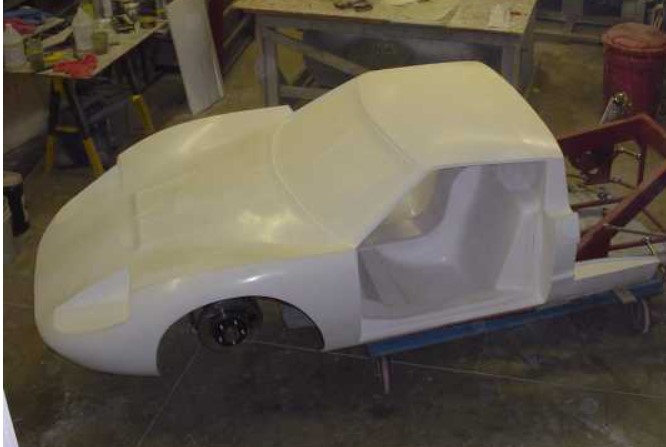
Any work or maintenance needed on components located in the front part of the chassis could only be accessed through the triangular vent holes, through the wheel wells, or from underneath the car. I put up with that inconvenience for 10 years, but during the transaxle change and rebuild process, while the body was still off the frame, I decided I wanted easier access by having the nose section tilt open. So, I took a sawzall and cut off the front section.
I made a cut about 4 inches in front of the lower edge of the windshield, and continuing each end of that cut down the edge of the door openings. I tried to emulate how the hood and fenders would meet up with the main body on a traditional car. This gave me fast and easy access to the radiator, the master cylinders, everything in the footbox area (under the dashboard) and the front suspension.
One drawback to this method is that it weakens the remaining main body section resulting in significant cowl area flex and shake, requiring reinforcing the remaining structure in a couple key areas. As mentioned on a previous page, the flex and shake was greatly reduced by bonding a 2″ wide x 0.375″ thick x 27″ long steel bar to the underside of the remaining roof panel (between the T-tops). Additional stiffening would come later during the Second Major Rebuild when a tubular steel framework was added to the top of the footbox area.


Next: Wider wheels and tires require new fender flares
Back to the Content Links for this post.


