
A major factor that had an impact on most of the work performed after the year 2000 was acquiring and learning how to use CAD software. Before long, I was able to get a fairly accurate representation of the chassis and engine into the CAD system. I remember being totally amazed at how the chassis could be viewed from any angle. Viewing photo-realistic renderings of planned modifications gave me more confidence that a proposed change would be successful. My CAD skills were constantly improving as I learned how to model as much of the existing Valkyrie as I could, eventually creating a close approximation of the Valkyrie body surfaces in 2004. I didn’t realize it at that time, but those improving CAD skills would become even more valuable 15 years later when my son gave me a 3D printer for Christmas. More on that topic to follow.
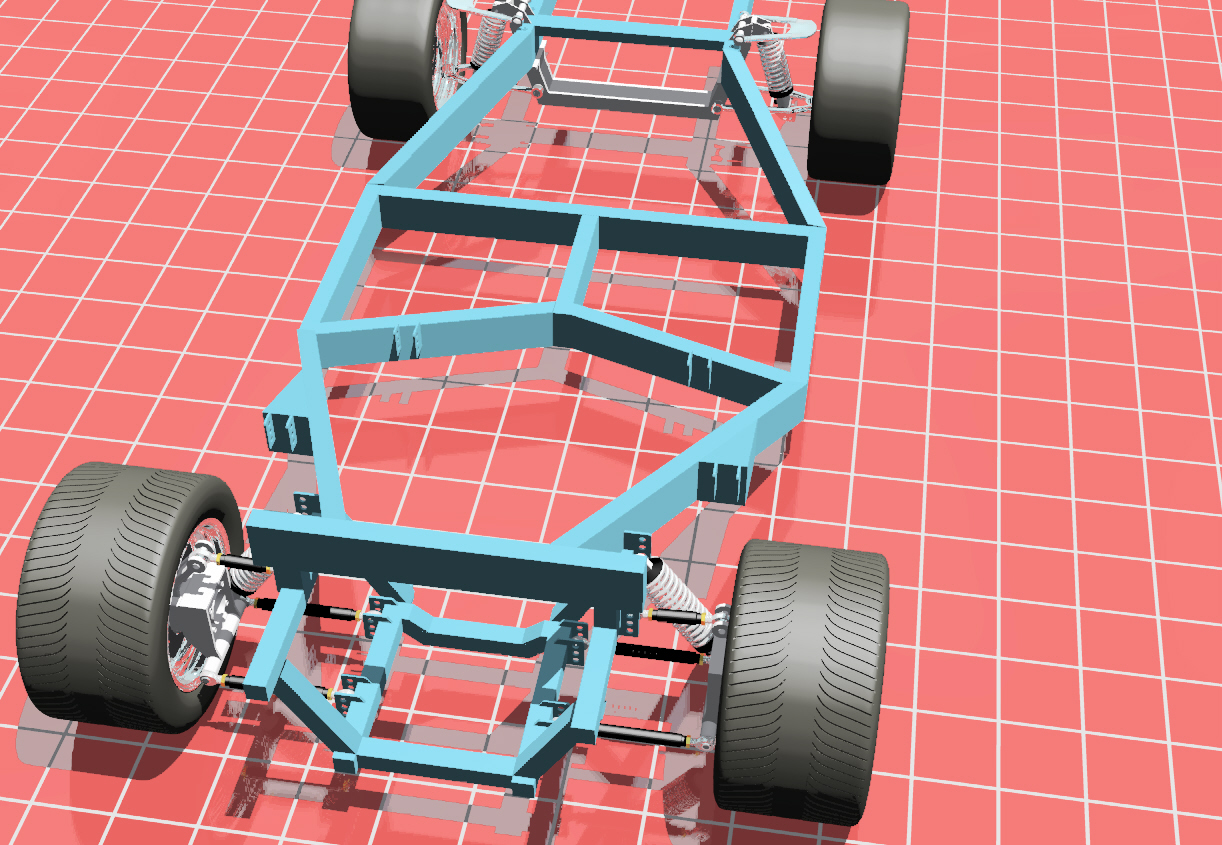

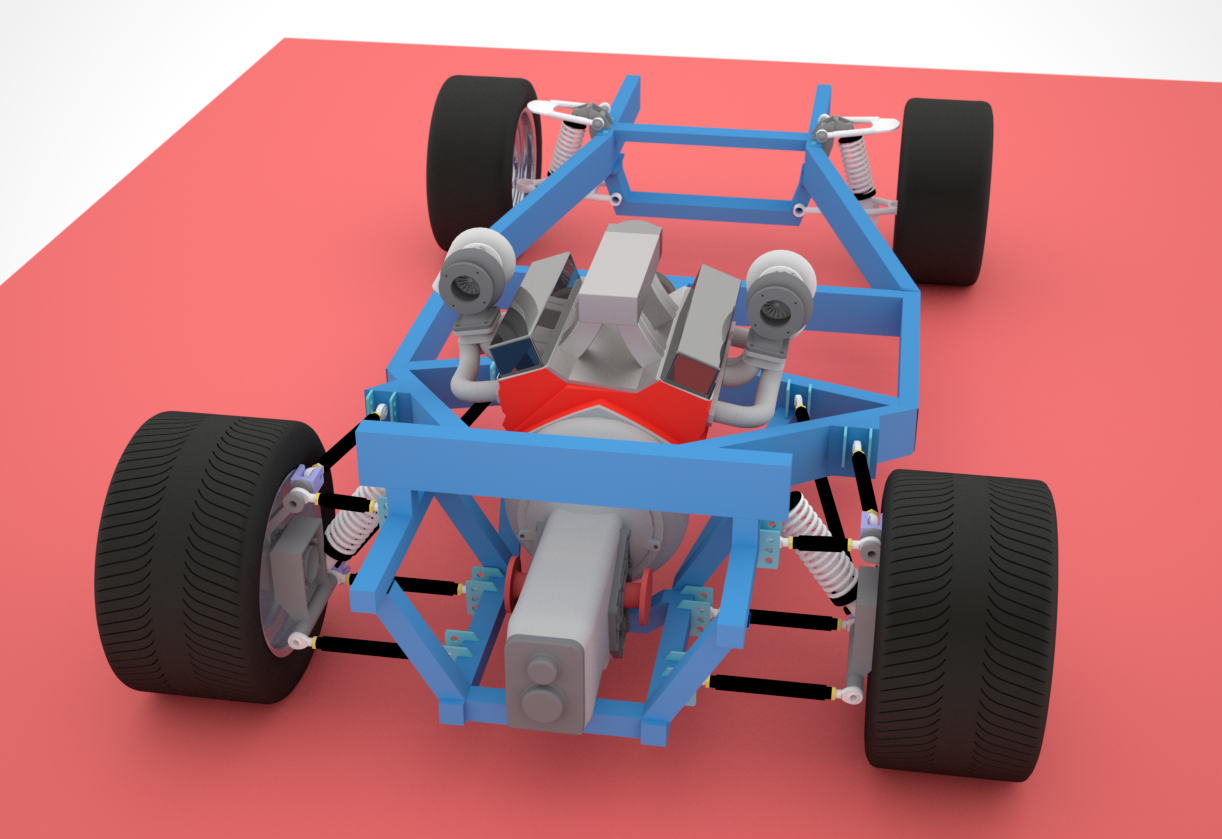
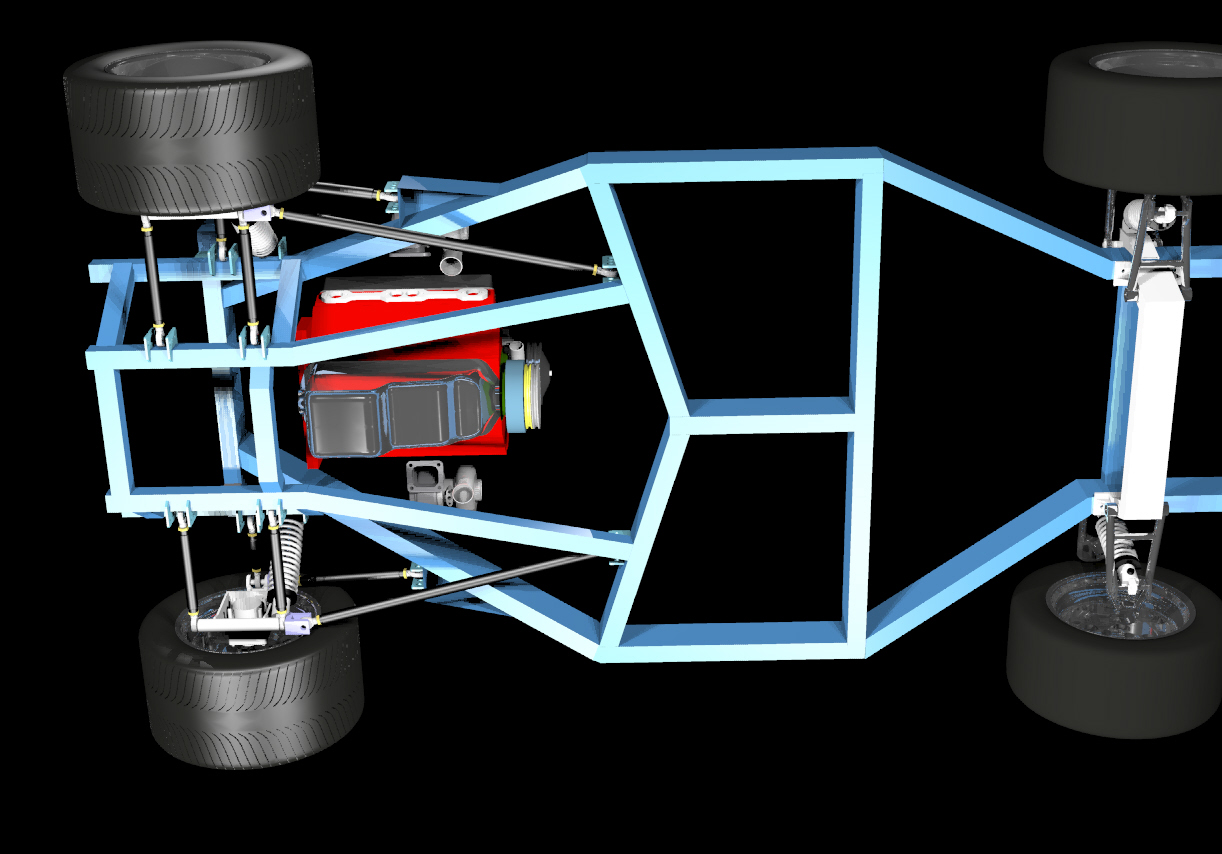


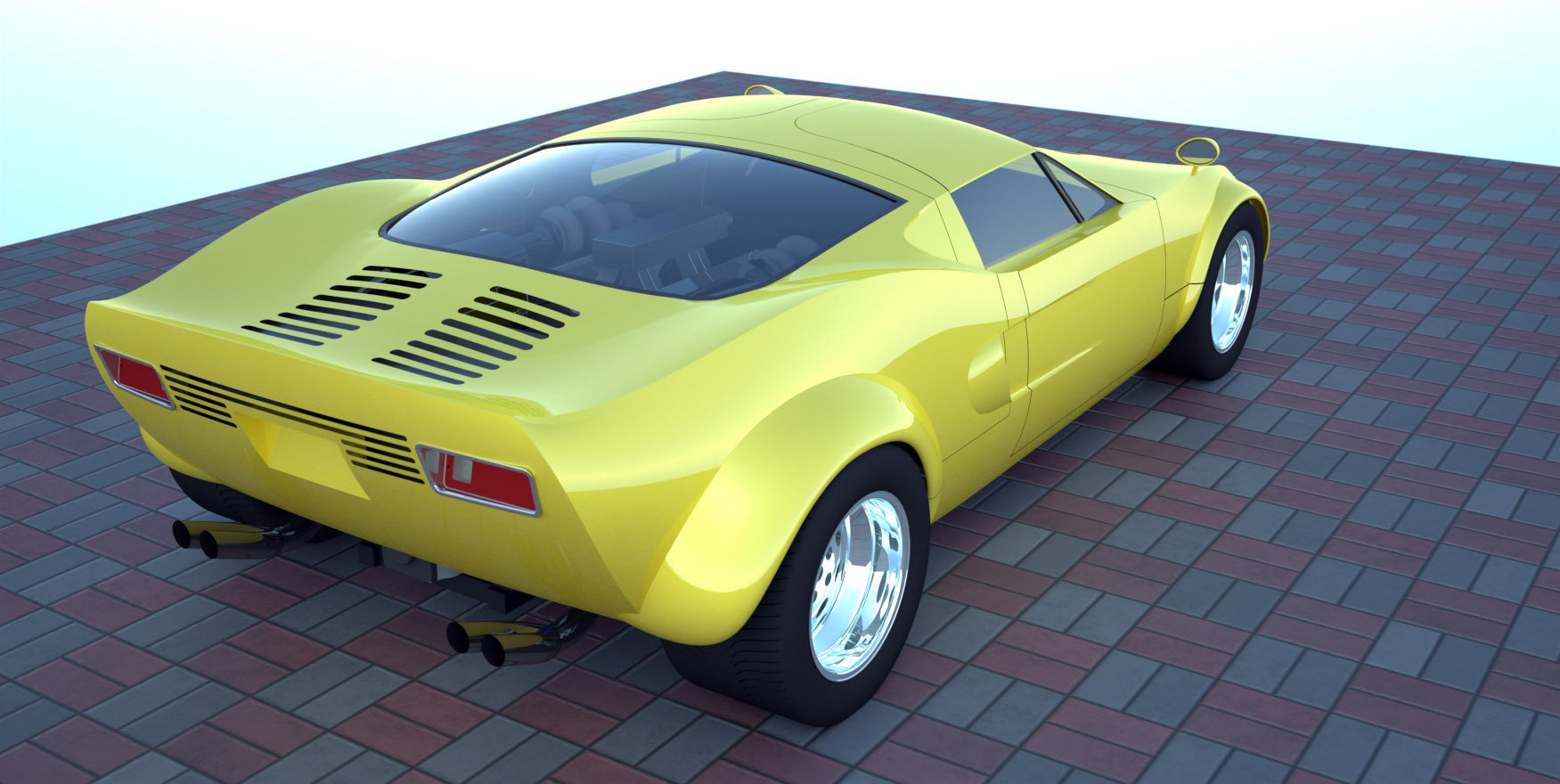

The CAD model of the body used in the renderings above was created through manual reverse engineering, starting with a tape measure and a sketch pad. Clearly some proportions of the body are not truly accurate, but it’s close enough to give me a good idea how things will look and if there may be significant interference between objects. When and if I ever add a portable 3D scanner to my toolbox, I will revise the body surface layers in the CAD files and create a more accurate model of the body. The chassis was relatively easy to model as it is comprised mostly of straight lines, rectangles and square tubes- these are the things I learned how to model first when learning the CAD software.
Next: A New IFS by Jim Meyer Racing
Back to the Content Links for this post.


